
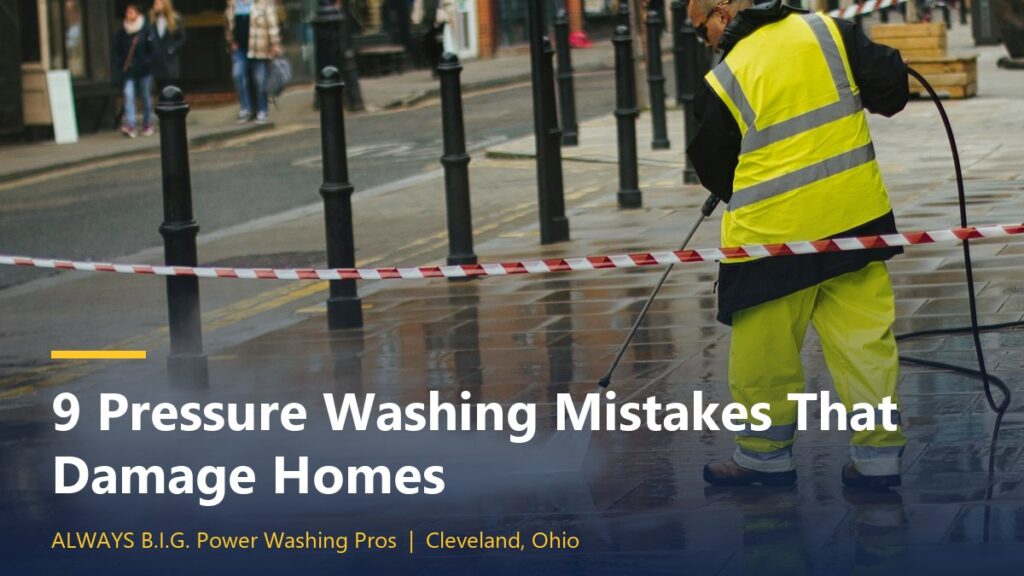
Quick answer: the biggest pressure washing mistakes are using too much pressure, using the wrong nozzle, holding the wand too close, spraying upward under siding, ignoring the surface type, skipping cleaning solution, forgetting to protect plants and openings, washing in poor conditions and working without safety gear. Most are avoided by matching the method to the surface.
A pressure washer feels like a magic eraser for the outside of your house. It can also scar wood, dent aluminum, strip paint and soak the inside of your walls. Here are the 9 mistakes we see most.
1. Using too much pressure
More pressure is not better. Delicate surfaces like wood, vinyl, stucco, roofing and painted surfaces need gentle settings. If you are not sure, start low and test in a hidden spot.
2. Using a narrow, pinpoint nozzle
A 0-degree or narrow tip focuses all the force into a tiny spot. It can cut into wood, etch concrete and even slice skin. Use a wider fan tip, such as 25 or 40 degrees, for most cleaning.
3. Holding the wand too close
Distance changes pressure dramatically. A few inches too close can leave permanent marks. Keep a steady, safe distance and move in smooth, overlapping passes.
4. Spraying upward under siding laps
Water forced behind siding gets into wall cavities. That moisture can lead to mold, rot and damaged insulation, and it often does not show for months. Spray downward and at a gentle angle. See vinyl siding cleaning.
5. Using the same method on every surface
A technique that works on concrete will hurt wood or stucco. Each surface has its own needs:
| Surface | Better approach |
|---|---|
| Vinyl siding | Soft wash |
| Wood deck | Cleaner and low pressure, with the grain |
| Brick | Low pressure, mind the mortar |
| Concrete | Surface cleaner and moderate pressure |
| Roof | Soft wash only, no pressure |
| Windows and screens | Gentle cleaning, not pressure |
6. Skipping detergent and relying on water alone
Algae, mildew and oil need chemistry. Blasting with plain water just pushes growth around and leaves roots behind. A proper cleaning solution does the work, so you can use lower pressure. See soft washing vs pressure washing.
7. Forgetting to protect plants, outlets and openings
- Wet nearby plants and cover delicate ones
- Close windows and doors tightly
- Cover outdoor outlets, lights and electrical boxes
- Move furniture, cars and pets away
- Check dryer vents and gaps in siding
8. Working in bad conditions
- Freezing temperatures can freeze water on surfaces.
- High wind drifts chemicals and overspray.
- Strong sun dries cleaner too fast, which leaves streaks.
- Wet ladders and ground raise fall risk.
Pick a mild, calm day, and work in sections so cleaner does not dry.
9. Ignoring safety
Pressure washers are dangerous. Wear safety glasses, closed shoes and gloves. Never point the wand at people or pets. Do not use a pressure washer on a ladder, since the kickback can throw you off. Do not use it near electrical hazards. Roofs and heights are best left to professionals.
Signs you may have already caused damage
- Fuzzy or splintered wood
- White streaks or etched lines on concrete
- Dented or cracked siding
- Water stains inside walls after washing
- Peeling paint where there was none before
- Loose or damaged window screens
If you see these, stop. Minor surface fuzz on wood can be sanded. Water behind siding should be inspected before it causes mold.
How to do it right
- Test in a hidden area
- Start with low pressure and increase only if needed
- Use the right cleaner and let it dwell
- Rinse from the top down
- Keep the wand moving
- Let surfaces dry before sealing or painting
When to hand it to a pro
If you want the result without the risk, hire a professional who knows the surface and the right method. Our house washing is a soft wash at $0.21 per square foot, and our concrete cleaning starts at $0.23 per square foot. Read DIY vs professional power washing for a fuller comparison.
Frequently Asked Questions
What PSI is safe for house siding?
Generally low. Many cleaners avoid high pressure on siding entirely and use soft washing. Follow siding manufacturer guidance.
Can pressure washing cause mold?
It can if water is forced behind siding and stays trapped. Spray downward and let surfaces dry.
What is the safest nozzle for most cleaning?
A wider fan tip such as 25 or 40 degrees is safer than a narrow tip.
Can I damage concrete with a pressure washer?
Yes. Too much pressure or a narrow tip can etch lines into the surface. A surface cleaner gives a more even result.
How do I know if my siding was damaged?
Look for cracks, dents, loose panels and moisture stains. If unsure, have a pro inspect it.
Related reading
- Soft Washing vs Pressure Washing: What Is the Difference?
- DIY vs Professional Power Washing: A Cleveland Homeowner's Honest Comparison
- Vinyl Siding Cleaning Guide for Ohio Homes: What Works, What to Avoid and How Often
Get a Free Quote from ALWAYS B.I.G.
Ready to put this to work? Use the instant estimate on our site, book online in a few clicks, or call or text (216) 202-8264. We serve homeowners and businesses across Cleveland and Northeast Ohio.
About the Author
Michael Betts is the founder of ALWAYS B.I.G. Power Washing Pros, an owner-operated exterior cleaning company serving homeowners and businesses across Cleveland and Northeast Ohio with house washing, roof cleaning, gutter services, window cleaning and concrete cleaning.
Call or text (216) 202-8264, email michael@ohiopowerwashingpros.com, or read more homeowner guides in the Curb Appeal Report.