
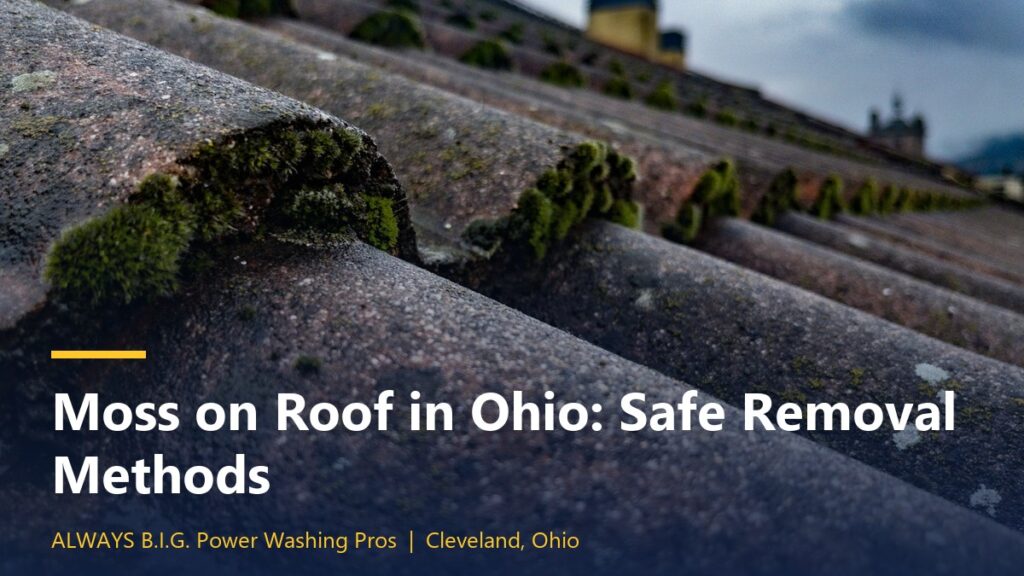
Quick answer: moss grows on shaded, damp roofs and holds moisture against shingles, which can lift edges, loosen granules and shorten roof life. The safest removal uses a low-pressure treatment that kills the moss, then a gentle rinse or natural wash-off over time. Avoid scraping, wire brushes and pressure washing, which can strip shingle granules and void warranties.
Moss is common on north-facing slopes, under trees and in damp neighborhoods. It looks like a green or brown carpet, and it grips shingles tightly. Here is why it is a problem and how to deal with it correctly.
Why moss grows on roofs
- Shade. Trees and nearby buildings keep roofs damp.
- Moisture. Humid weather and slow-drying surfaces help moss thrive.
- Debris. Leaves, pine needles and shingle grit hold water and feed growth.
- Roof texture and age. Rougher, older shingles hold more moisture.
- Low pitch. Water drains slowly from flatter slopes.
Is moss harmful?
Moss roots, called rhizoids, can work into gaps between shingles. As moss thickens, it:
- Holds water against the roof surface
- Lifts shingle edges, which makes them easier for wind and water to get under
- Wears away protective granules
- Adds weight to the roof and gutters
- Can lead to leaks and early replacement over time
A thin layer may not hurt in the short term, but thick moss should not be ignored.
Moss vs algae
Algae forms the dark streaks you often see on roofs. Moss is thicker, green or brown, and raised. Algae is mostly cosmetic early on, while moss is physically more damaging. Both thrive in similar conditions. See black streaks on your roof.
How NOT to remove roof moss
- Pressure washing. It strips granules, can drive water under shingles and often voids warranties.
- Scraping with metal tools or wire brushes. These scratch and tear shingles.
- Walking on a wet, mossy roof. It is very slippery and dangerous.
- Using strong bleach without protecting plants and metal. It can corrode flashing and harm landscaping and gutters.
Safe removal methods
Soft wash treatment
A low-pressure application of a roof-safe solution kills moss and algae at the source. The dead growth can loosen and wash away with rain or a gentle rinse. This is the preferred approach for many roofers and cleaners.
Gentle manual removal
For light moss, a soft brush on a pole, used from a safe position, can lift dead growth after treatment. Do not scrub hard.
Zinc or copper strips
Metal strips installed near the ridge release trace metal ions with each rain that slow moss and algae growth below them. They help prevent regrowth, but they are not a quick fix.
What to do before and after
- Check roof condition. If shingles are curling, missing or damaged, talk to a roofer first.
- Protect plants and metal. Rinse plants before and after, and avoid runoff on sensitive surfaces.
- Treat on a mild, calm day. Wind and heat can drift or dry the solution.
- Allow time. Some moss dies and drops away over days or weeks.
- Clean gutters afterward. Debris from the roof ends up there. See gutter cleaning.
Preventing regrowth
- Trim branches to bring in sun and airflow
- Keep roofs and gutters clear of leaves and debris
- Add zinc or copper strips near the ridge
- Clean early, before growth gets thick
- Make sure attic ventilation is adequate
When to call a professional
Roofs are dangerous. Pitch, height and wet surfaces make falls a serious risk. Hire a trained professional if you have a steep roof, thick moss or are not sure what your shingles can take. Roof treatment is quoted after we see the roof, since the size, pitch and growth matter. We tell you honestly if the roof needs a roofer’s attention instead.
Frequently Asked Questions
Does moss damage a roof?
Over time it can. It holds moisture, lifts shingle edges and wears away protective granules.
Can I pressure wash moss off my roof?
It is not recommended, since high pressure damages shingles and can void warranties.
How long does it take for moss to die after treatment?
Often a few days to a few weeks, depending on the product and weather.
What is the best way to prevent moss on a roof?
Increase sunlight and airflow, keep the roof clear of debris and consider zinc or copper strips.
Do roof cleaning and gutter cleaning go together?
Yes. Debris from roof cleaning collects in gutters, so cleaning both at once is efficient.
Related reading
- Black Streaks on Your Roof in Cleveland? What They Are and How to Remove Them Safely
- 9 Pressure Washing Mistakes That Damage Homes (and How to Avoid Them)
- Gutter Repair or Replacement? 9 Signs It Is Time for New Gutters in Northeast Ohio
Get a Free Quote from ALWAYS B.I.G.
Ready to put this to work? Use the instant estimate on our site, book online in a few clicks, or call or text (216) 202-8264. We serve homeowners and businesses across Cleveland and Northeast Ohio.
About the Author
Michael Betts is the founder of ALWAYS B.I.G. Power Washing Pros, an owner-operated exterior cleaning company serving homeowners and businesses across Cleveland and Northeast Ohio with house washing, roof cleaning, gutter services, window cleaning and concrete cleaning.
Call or text (216) 202-8264, email michael@ohiopowerwashingpros.com, or read more homeowner guides in the Curb Appeal Report.