
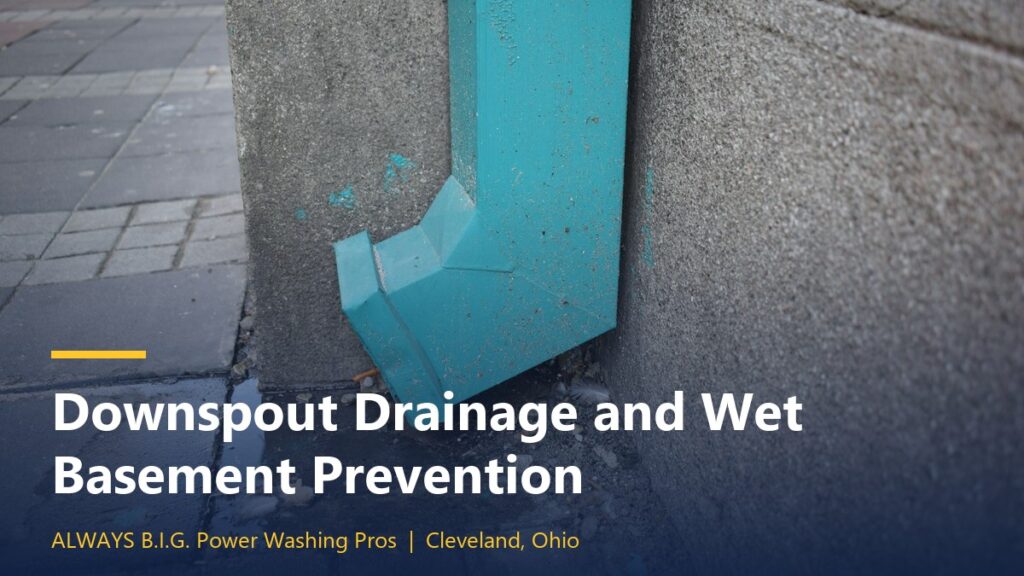
Quick answer: downspouts should carry roof water at least 4 to 6 feet away from your foundation, onto ground that slopes away from the house. Short, broken or buried downspouts dump water right beside the foundation, which can lead to wet basements, cracks and settling. A few simple fixes often solve it.
Gutters get most of the attention, but the downspouts do the real delivery work. A single downspout can discharge hundreds of gallons during a heavy storm. If that water lands against your foundation, the soil soaks up and pushes moisture toward your basement or crawl space.
How much water are we talking about?
A rough rule: 1 inch of rain on 1,000 square feet of roof produces about 600 gallons of water. A typical home sheds thousands of gallons in a single storm, and all of it passes through the gutters and downspouts. When they are clogged or poorly aimed, the water goes somewhere else.
Signs your downspouts are causing trouble
- Water pooling near the foundation after rain
- Soil washed out or eroded below the downspout
- Damp spots, musty smell or white mineral deposits in the basement
- Mulch or soil pushed away near the house
- Stains or algae on siding near the base
- Cracks in the driveway, patio or walkway beside the house
How to check your drainage
- Watch during rain. Walk the house in a steady rain and see where water exits each downspout.
- Run a hose test. Put a hose in the gutter and check flow and where it lands.
- Check the grade. Soil should slope away from the foundation, dropping about 6 inches over the first 10 feet when possible.
- Look for clogs. If water backs up at the elbow, the downspout is blocked.
- Inspect underground pipes. If a downspout connects to a buried drain, confirm the pipe is not crushed or blocked.
Easy ways to improve downspout drainage
Add or lengthen extensions
A downspout extension or splash block moves water farther from the foundation. Flexible and rigid extensions are inexpensive and available at most home centers.
Use a roll-out extension
These sit flat on the lawn, unroll under the water pressure and roll back up after the storm, so they do not block mowing.
Redirect to a safe place
Aim water toward a lawn area, garden bed or drain that slopes away. Never send it onto a neighbor’s property, a sidewalk where it will freeze, or toward another structure.
Fix the grade
Add compacted soil to build a slope away from the house. Keep the mulch and soil level below the siding and sill plate.
Clean the system
The simplest fix is often cleaning. A downspout packed with leaves and roof grit overflows at the top, sending water down the wall and into the ground at the foundation. Our gutter cleaning service clears downspouts as part of every job.
Winter drainage in Northeast Ohio
Water that drains slowly in cold weather can freeze at the outlet and form an ice patch near walks and steps. Extending downspouts onto lawn areas, away from paths, lowers that risk. Also see our guide on ice dams and gutters.
When it is more than a gutter problem
If you have standing water in the basement, a horizontal crack in a foundation wall or a sloping floor, call a qualified foundation or waterproofing contractor. Gutters and downspouts help, but they cannot fix structural damage.
Quick maintenance schedule
- Spring: clean gutters and downspouts, check extensions, repair erosion
- Summer: check for clogs after big storms
- Fall: clean after leaves drop, test the flow and aim
- Winter: keep outlets clear of snow and ice when safe
Frequently Asked Questions
How far should a downspout drain from the house?
A common target is at least 4 to 6 feet from the foundation, farther if your lot is flat or your soil drains slowly.
Can clogged gutters cause a wet basement?
They can contribute. When gutters and downspouts overflow, water drops beside the foundation instead of flowing away.
Should downspouts connect to underground pipes?
Only if the pipe is clear, correctly sloped and drains somewhere safe. Buried pipes that are crushed or clogged can send water back toward the house.
How often should I check my downspouts?
Twice a year at minimum, and after any big storm. Fall and spring are the best times.
What if my downspouts are in poor shape?
Dented, rusted or separated sections should be repaired or replaced. See gutter repair vs replacement for signs to look for.
Related reading
- Gutter Repair or Replacement? 9 Signs It Is Time for New Gutters in Northeast Ohio
- How Often Should You Clean Gutters in Cleveland, Ohio?
- Ice Dams and Clogged Gutters in Northeast Ohio: How to Prevent Winter Roof and Water Damage
Get a Free Quote from ALWAYS B.I.G.
Ready to put this to work? Use the instant estimate on our site, book online in a few clicks, or call or text (216) 202-8264. We serve homeowners and businesses across Cleveland and Northeast Ohio.
About the Author
Michael Betts is the founder of ALWAYS B.I.G. Power Washing Pros, an owner-operated exterior cleaning company serving homeowners and businesses across Cleveland and Northeast Ohio with house washing, roof cleaning, gutter services, window cleaning and concrete cleaning.
Call or text (216) 202-8264, email michael@ohiopowerwashingpros.com, or read more homeowner guides in the Curb Appeal Report.